What You Should Know
- How to spell pentatonic scales
- Counting rhythms up to sixteenth notes
- The five patterns for major and minor pentatonic scales
What You Will Learn
- Picking exercises and sequences for pentatonic scales
Pentatonic Scale Exercises for Alternate Picking Practice
The Pentatonic Scale
The pentatonic scale is a five note scale. It is used frequently in rock, blues, and many other styles. Two kinds of pentatonic scales are commonly used: the major and minor pentatonic. There are five scale patterns that allow you to play both scales over the entire neck. Due to the relationship between the major and minor pentatonic scale, the five patterns are the same for both major and minor pentatonic. All of the patterns are arranged so that there are two notes per string.
Exercises
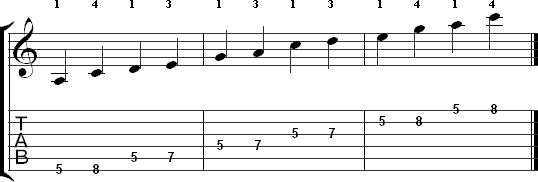
All of the exercises use the A minor pentatonic scale pattern shown below. Use the fingering given for all of the exercises. This pattern should be used for learning each exercise. Once you are comfortable with this pattern, start working with the other four patterns.
Exercise 1
Exercise 1 is a simple ascending and descending pattern that just goes straight through the scale.
Exercise 2
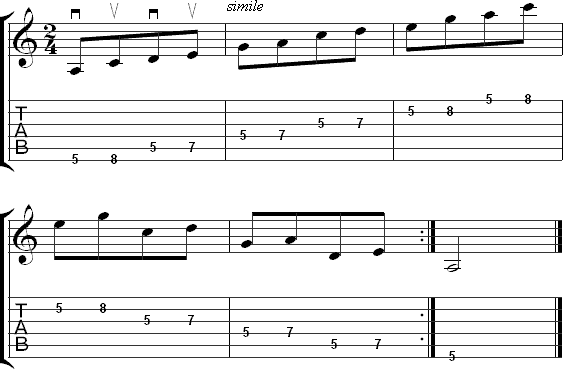
This is a variation of Exercise 1 where the scale is played ascending and descending, but with the notes on each string played backwards.
Exercise 3 - Groups of Two
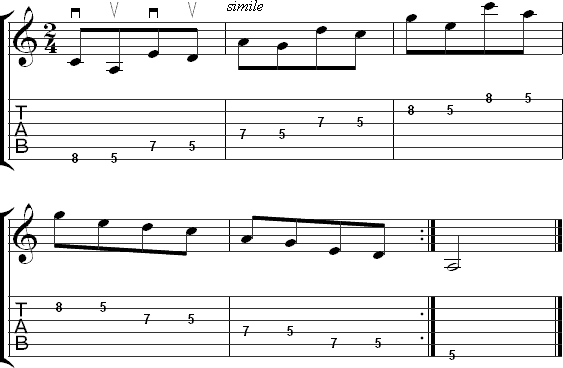
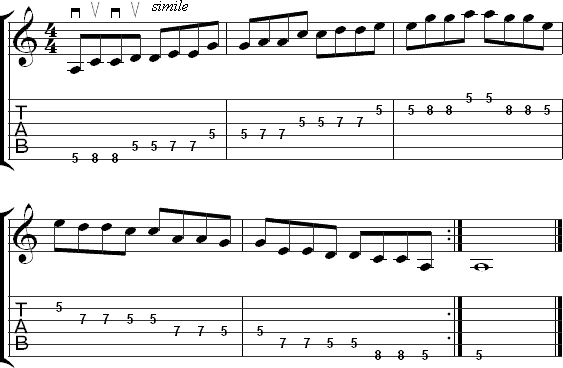
Exercise 3 is the pentatonic scale played ascending and descending in groups of two. This means that you start on the first degree of the scale and play up one note, which creates a group of two notes. The same pattern is repeated on each successive degree of the scale. Groups of three, four, five, or more notes are possible.
Playing in groups of two produces a pair of repeated notes on the "and" of the beat and the start of the next beat. This may make the left hand part a little awkward since you are picking twice for most notes. Make sure you are holding each note long enough to pick it both times rather than releasing it after playing it once.
Exercise 4 - Groups of Three
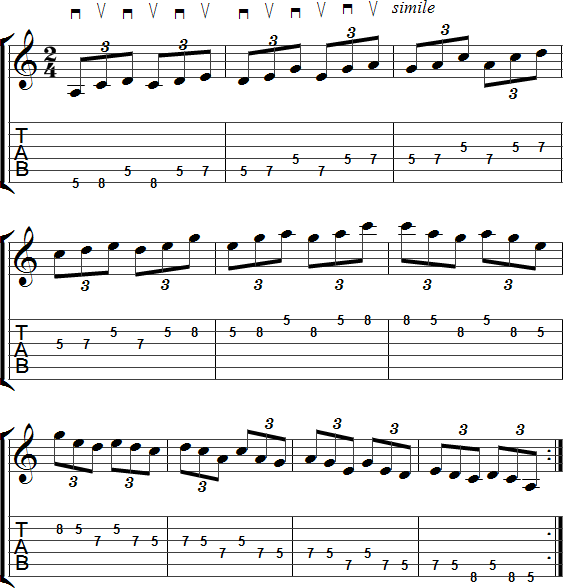
Exercise 4 is groups of three in triplets. This exercise may seem difficult at first because you have to keep very close track of where you are in the scale in order to avoid getting lost. Playing in groups of three requires you to play up and down through the notes in the scale, so getting lost is pretty easy. Concentrate on exactly where you are in the scale at all times. Practice slowly and only increase the speed gradually as you can play it perfectly at a given tempo. If necessary, try practicing the exercise in smaller chunks, such as one measure at time.
Pentatonic Sequences
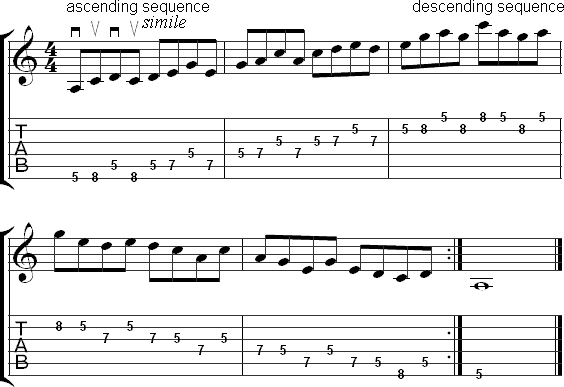
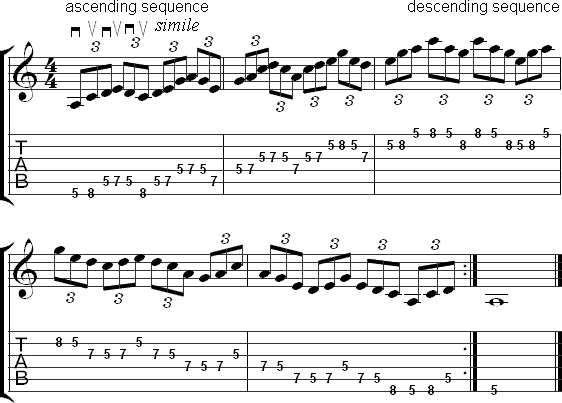
A sequence is a short pattern that is repeated on each degree of the scale. The two sequences below are common patterns. They should be practiced with each scale pattern and in all keys. Both sequences show the ascending and descending version of the patterns. Work on these only after you are comfortable with the basic exercises provided above.
Sequence 1
Sequence 1 is a common pattern of four notes in eighth notes.
Sequence 2
Sequence 2 is a pattern in triplets that ascends and descends through the notes in the scale in groups of six notes. The pattern is repeated on each string.
Practice Tips
These exercises should be practiced two different ways: chromatically with a single scale pattern and on a single root going through all five scale patterns.
Chromatically
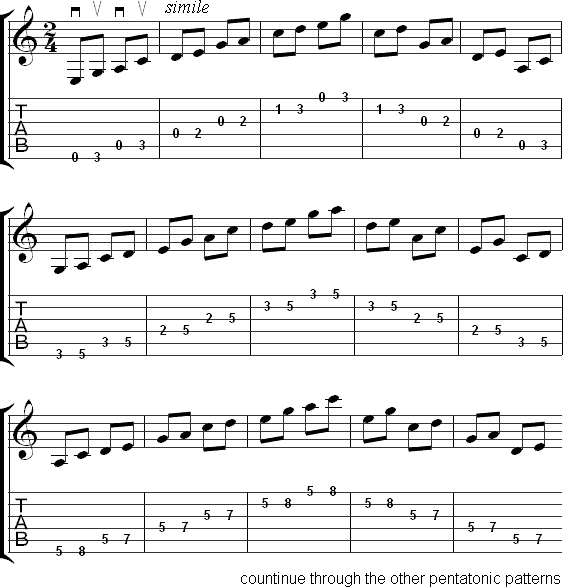
Pick a pentatonic scale pattern and play it starting at the first fret, moving up the neck chromatically one fret at a time. The example below shows how this works with the first exercise:
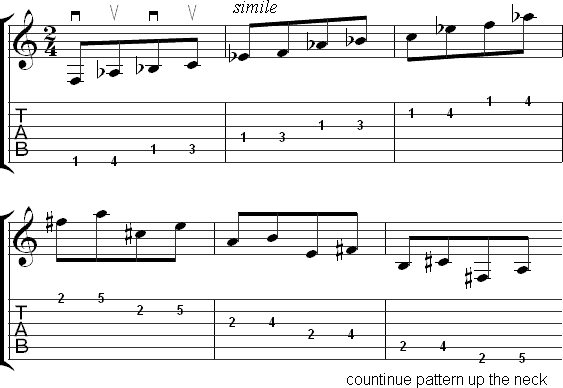
This approach should eventually be used with all five scale patterns. You can go up the neck as far as you want with the exercise.
All Five Patterns Using the Same Root
Pick a root note, such as A, and play the exercise with all five scale patterns up and down the neck. Try this with both the major and minor scales starting on various roots. Here is how this would work with the first exercise using A as the root: